3899 Jackson St #7, Denver, CO 80205, United States

(800) 319-2608

(720) 459-5252

Mon - Fri: 9:00am - 6:30pm

Online support always open

Author name: The Buzz Traffic

Protect floors and walls during a move in Denver CO
Furniture movers USA, Logistic Pro long-distance movers

How to Protect Hardwood Floors, Walls, and Furniture During a Denver Home Move

Moving into a new home is an exciting experience, but scratches, dents, and accidental damage can turn moving day into a stressful experience. Knowing how to Protect Floors and Walls During a Move in Denver, CO can help homeowners keep their property in good condition while relocating household belongings. From hardwood flooring and painted walls to doorways, staircases, and furniture, every area needs proper attention during the moving process. Heavy furniture, moving equipment, dirt, and repeated foot traffic can damage surfaces if the right precautions are not taken. Weather conditions in Denver can also create additional challenges, especially during rainy or snowy days when moisture and debris may enter the home. Whether you are moving from an apartment, townhouse, or single-family home, proper preparation can reduce the risk of property damage. This article explains practical ways to protect your home and belongings before, during, and after your Denver relocation. Table of Contents Why Home Protection Matters During a Move How to Protect Floors and Walls During a Move in Denver Best Ways to Protect Hardwood Floors How to Prevent Wall and Doorway Damage Protecting Furniture During Loading and Unloading Essential Materials for Moving Day Protection Common Moving Mistakes to Avoid When to Hire Professional Movers in Denver, CO Moving Day Protection Checklist Frequently Asked Questions Why Home Protection Matters During a Move A residential move involves several activities, including lifting furniture, carrying boxes, navigating hallways, and loading belongings into a moving truck. Each activity can create opportunities for accidental damage when surfaces and belongings are not properly protected. Some common moving-day problems include: Scratches and dents on hardwood flooring. Scuff marks on painted walls and baseboards. Damage to door frames and hallway corners. Scratches on wooden furniture and cabinets. Carpet stains caused by mud, dirt, and moisture. Damage to stair railings and entryways. These problems can happen in both the home you are leaving and the property you are moving into. Preparing both locations before moving day can help reduce unnecessary repairs and make the relocation process more organized. For Denver homeowners, weather is another factor worth considering. Rain, snow, and mud can enter through exterior doors and affect floors when movers repeatedly walk between the house and the moving truck. How to Protect Floors and Walls During a Move in Denver Protecting your home’s surfaces starts with identifying the areas that will experience the most activity. Main entrances, hallways, staircases, and doorways usually need extra attention because they are common routes for carrying furniture and boxes. Before moving begins, inspect the property and prepare these areas with suitable protective materials. 1. Identify High-Traffic Areas Walk through your home and identify the routes movers will use. These may include the front entrance, connecting hallways, staircases, and rooms containing large furniture. Pay attention to narrow passages and areas where furniture may need to turn. Planning these routes in advance helps reduce unnecessary movement and accidental contact with walls. 2. Prepare Protective Coverings Use suitable protective materials in areas where repeated foot traffic or equipment movement is expected. Floor runners, protective boards, and furniture blankets can help create barriers between household surfaces and moving activity. Make sure coverings are secured properly and do not slide, curl, or create tripping hazards. 3. Measure Large Furniture and Access Points Measure large furniture pieces before moving day. Compare their dimensions with doorways, hallways, staircases, and other access points. This helps determine whether furniture needs to be rotated, partially disassembled, or moved through a different entrance. Planning these details in advance can help prevent scratches, dents, and unnecessary handling. Best Ways to Protect Hardwood Floors Hardwood flooring can improve the appearance of a home, but its finished surface can be vulnerable to scratches, dents, and moisture. Heavy furniture and small particles of dirt can cause damage if the flooring is not prepared correctly. 1. Clean Floors Before Placing Protection Sweep or vacuum the moving path before installing protective coverings. Small particles of dirt, gravel, and dust can become trapped underneath runners and create scratches. Pay particular attention to: Entryways and front doors. Hallways connecting different rooms. Areas around staircases. Living rooms with large furniture. Paths leading toward the moving truck. Starting with clean flooring helps reduce the risk of damage underneath protective materials. 2. Use Floor Runners and Protective Boards Floor runners and protective boards create a barrier between hardwood flooring and moving traffic. Depending on the surface and expected activity, homeowners can consider: Neoprene floor runners for walking paths. Heavy-duty floor protection boards for high-traffic areas. Suitable protective paper for lighter foot traffic. Non-slip coverings designed for hard flooring. Choose materials that are appropriate for the flooring finish. Avoid applying ordinary packing tape or unsuitable adhesives directly to finished hardwood because they may leave residue or damage the surface. 3. Use Furniture Sliders Carefully Furniture sliders can make it easier to reposition sofas, dressers, tables, and cabinets. For safer use: Clean furniture legs before placing sliders. Choose sliders designed for hard flooring. Make sure the furniture is stable. Avoid forcing heavy items across the floor. Lift furniture when practical instead of dragging it. If an item is especially heavy or difficult to maneuver, appropriate moving equipment and experienced handling may be a safer choice. 4. Prevent Moisture and Dirt From Entering Denver weather can change quickly, so moving during rain or snow requires additional preparation. Place entrance mats near exterior doors, keep cleaning supplies available, and check protective runners throughout the move. Clean up spills promptly rather than allowing water to remain on hardwood surfaces. How to Prevent Wall and Doorway Damage Walls, door frames, baseboards, and staircase corners can become damaged when large furniture is carried through narrow spaces. Here are some practical ways to reduce the risk of accidental damage. 1. Measure Furniture and Doorways Before moving large items, measure their height and width. Also check doorway openings, hallway widths, staircase turns, and ceiling clearance. A sofa or wardrobe that fits easily inside a room may require a different angle when passing
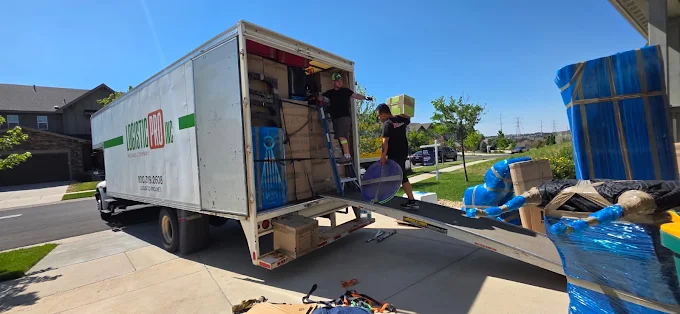
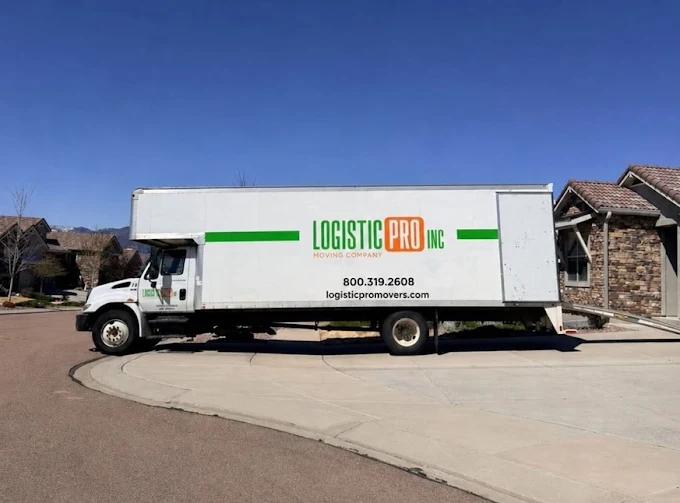
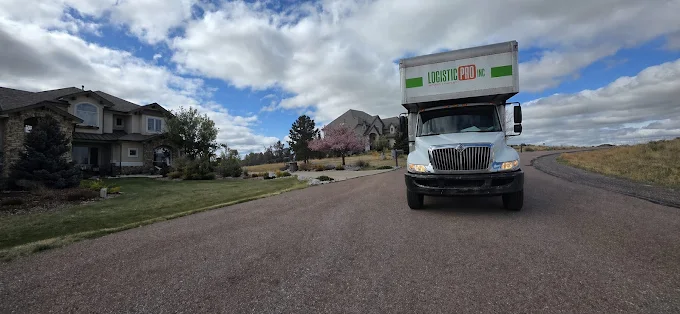
Moving truck outside a residential apartment building in Denver, Colorado.
Affordable local movers USA, Logistic Pro long-distance movers

Apartment vs. House Moving in Denver: What’s Different?

Moving into a new home is exciting, but the moving process can look very different depending on where you live. Moving from an apartment in downtown Denver is not the same as moving from a single-family house in the suburbs. Building rules, elevators, parking, stairs, and the number of belongings can all affect how moving day works. When comparing Local Moving Services in Denver, CO, it is important to choose a moving plan that fits your property and access conditions. Whether you’re moving from an apartment to a house, downsizing, or relocating to another apartment, understanding these differences can help you prepare and avoid unnecessary stress. Let’s look at what makes apartment and house moves different and what you should consider before booking your movers. 1. What Is the Main Difference Between Apartment and House Moving? The biggest difference between apartment and house moving is access. Apartment moves often involve shared hallways, elevators, building schedules, and loading restrictions. House moves usually offer more direct access through a driveway or garage but may involve more rooms, furniture, stairs, and outdoor areas. Here is a quick comparison: Moving factor Apartment move House move Building access Shared entrances and hallways Usually private entrances Elevators May require reservations Usually not needed Parking Loading zones or limited spaces Driveway or street parking Stairs Common in walk-up buildings Depends on the number of floors Moving inventory Often fewer rooms May include more furniture and storage Building rules Management restrictions may apply HOA rules may apply in some communities Loading time Can depend on elevator and access windows Can depend on room count and carry distance These differences can affect the crew size, truck requirements, moving schedule, and overall estimate. For example, a small apartment on an upper floor may require more coordination than expected because movers must work around a shared elevator. Meanwhile, a larger house with a clear driveway may offer easier loading access despite having more belongings. 2. Why Do Apartment Moves in Denver Require More Building Coordination? Apartment moves often require additional planning because multiple residents share the same entrances, elevators, hallways, and parking facilities. Before booking your movers, check with building management to understand the moving rules and reserve the necessary spaces. Some Denver apartment buildings require residents to book a freight elevator or loading dock for a specific time. Others request proof of insurance from the moving company before allowing a crew into the building. These requirements can affect how quickly belongings can be moved. For example, if you’re leaving a high-rise apartment in LoDo, you may need to reserve the freight elevator and confirm the loading area before your moving truck arrives. Older walk-up buildings in areas such as Capitol Hill may create different challenges because of narrow stairways and tight turns. Before moving day, confirm: Whether a freight elevator reservation is required. Which entrances movers are allowed to use. Whether the building requires a Certificate of Insurance (COI). The available loading dock or truck parking area. Approved moving hours and any weekend restrictions. Whether large furniture can fit through the hallways and stairwells. Share these details with your moving company early. Logistic Pro Movers specifically identifies elevator reservations, building insurance requirements, parking, and stairs as important parts of planning Denver apartment moves. You can explore its local moving services in Denver to learn more about the company’s moving process. 3. What Should You Expect When Moving From or Into a House? House moves can involve more belongings, larger furniture, and multiple floors. Even when a house provides easier truck access, movers may need extra time to clear bedrooms, garages, basements, storage areas, and outdoor spaces. Unlike apartments, houses usually do not have shared freight elevators or building move-in windows. However, access can still become difficult when the driveway is narrow, the property has several staircases, or the truck cannot park close to the entrance. For example, moving from a three-bedroom house may involve furniture from several bedrooms, kitchen appliances, garage tools, patio furniture, and basement storage. These items can increase the total moving inventory even when the property has convenient access. Before requesting a moving estimate, consider: How many bedrooms and storage areas are being moved. Whether the home has a basement or multiple floors. The distance between the entrance and parking area. Whether large furniture needs disassembly. Whether outdoor furniture, grills, or garage equipment are included. Any narrow doors, staircases, or tight hallways. Don’t forget items stored in sheds, garages, and storage rooms. They can add more volume than homeowners initially expect. A complete inventory helps your movers plan the right equipment, crew size, and truck capacity. 4. How Do Apartment and House Moves Affect Moving Costs and Timing? Apartment and house moves are priced according to several factors, not simply the property type. The total volume of belongings, number of movers, access conditions, distance, packing requirements, and time needed to complete the work all influence the estimate. An apartment move is not always cheaper. A smaller apartment on the fourth floor without an elevator may require more handling time than a house with a larger inventory but easy driveway access. Similarly, a large house may require more movers and a bigger truck because of its furniture and storage contents. When requesting quotes for Local Moving Services in Denver, CO, provide the following information: Property size: Share the number of bedrooms and approximate inventory. Floor level: Explain whether either property has stairs or elevators. Parking: Tell the company how close the truck can park to the entrance. Large furniture: Identify pianos, safes, sectionals, and other specialty items. Packing needs: Mention whether you need full packing, partial packing, or transportation only. Moving date: Confirm your preferred date and any restrictions on move-in time. Logistic Pro Movers describes its estimate process as including an in-home or video walkthrough, an inventory review, and an assessment of access conditions. This helps the team plan the crew size and expected work time before moving day. Always request a written estimate that explains

Professional movers helping with a residential move in Denver, CO.
Moving Service, Professional home moving services

How Much Does It Cost to Hire Movers in Denver? Factors That Affect Your Price

How Much Does It Cost to Hire Movers in Denver? Factors That Affect Your Price Planning a move can be exciting, but figuring out how much it will cost is often one of the biggest challenges. Whether you are moving from an apartment, relocating your family home, or transferring your business, understanding your moving expenses can help you plan ahead. The cost of Professional Moving Services in Denver, CO depends on several factors, including the size of your move, travel distance, number of movers required, packing needs, and property access. Two moves of similar size can have very different prices depending on the services and conditions involved. In this guide, Logistic Pro Movers explains what affects moving costs in Denver, what services may be included in your estimate, and how you can keep your relocation within budget. How Much Do Professional Moving Services Cost in Denver? Professional moving costs in Denver can range from a few hundred dollars for a small apartment to several thousand dollars for a larger household. Your final price depends on the amount of furniture and belongings, labor time, travel distance, and additional services. As a recent market reference, moveBuddha’s October 2026 Denver cost guide reports the following typical local moving estimates: Home Size Estimated Moving Cost Studio apartment $413 1-bedroom home $574 2-bedroom home $929 3-bedroom home $2,146 4-bedroom home $2,462 5+ bedroom home $3,788 These figures come from third-party moving cost data covering 192 licensed local full-service movers in Denver. They are general market benchmarks, not fixed prices or quotes from Logistic Pro Movers. Your actual estimate may be higher or lower depending on your moving requirements. For long-distance relocations, pricing is usually based more on shipment size, weight, and total distance than on the hours needed for a local move. You can review the Denver moving cost breakdown to compare additional estimates. What Factors Affect the Cost of Hiring Movers in Denver? Several details can influence your moving estimate. Understanding these factors before requesting a quote can help you avoid unexpected expenses. 1. Size of Your Home and Number of Belongings The size of your move is one of the biggest pricing factors. A studio apartment usually requires fewer movers, less truck space, and less loading time than a four-bedroom house. However, the number of belongings matters just as much as the number of rooms. A small apartment filled with heavy furniture and storage boxes may require more work than a larger home with fewer items. Money-saving tip: Sort through your belongings before moving. Donate, sell, or discard items you no longer need. Moving fewer items can reduce loading time and the amount of truck space required. 2. Distance Between Your Locations How far are you moving? The distance between your current home and your new destination can directly affect transportation costs. For local moves within Denver and nearby communities, pricing may be based on crew size, labor hours, and the company’s local travel or minimum-charge policy. For long-distance moves, companies generally consider the total mileage and size of the shipment when preparing an estimate. Fuel, transportation planning, and delivery arrangements may also affect the final price. Before booking, provide both pickup and delivery addresses so the moving company can assess the route and prepare a more accurate estimate. You can explore long-distance and other moving services from Logistic Pro Movers to understand the available relocation options. 3. Number of Movers and Time Required The number of movers needed for your relocation can also affect the cost. A larger household or a property with heavy furniture may require a bigger crew to complete the job efficiently. The total labor time can depend on how many items need to be loaded, whether furniture needs to be disassembled, and how easily movers can access both properties. For example, moving a small apartment with direct ground-floor access may take less time than moving a fully furnished home with multiple staircases and limited loading access. Ask your moving company how crew size, hourly charges, minimum service hours, and travel time are calculated. 4. Packing and Additional Services Packing is another important factor when estimating moving expenses. Some customers prefer to pack everything themselves, while others need help preparing fragile belongings, furniture, kitchen items, and electronics. Professional packing, furniture protection, disassembly and reassembly, and specialty crating may increase the total cost depending on what you request. Logistic Pro Movers offers packing and full-service moving options, allowing customers to discuss the level of assistance needed for their relocation. You can review the company’s professional packing and moving services to explore the available options. Practical tip: If you want to manage your budget, pack everyday household items yourself and ask about professional assistance for fragile or specialty belongings. 5. Stairs, Elevators, and Property Access Property access can make a significant difference in how long a move takes. Apartments with stairs, busy downtown buildings, limited parking, and long distances between the truck and entrance can require extra labor. For example, movers may need additional time to carry furniture down several flights of stairs or wait for an elevator reservation. In some situations, a smaller shuttle vehicle may also be needed when a moving truck cannot reach the property directly. Before requesting your estimate, tell the moving company about: Staircases or walk-up apartments. Elevator reservations and building restrictions. Limited parking or loading zones. Long walking distances from the truck to your entrance. Narrow hallways, doorways, or difficult furniture access. Providing these details early helps the company plan the right crew, equipment, and time for your move. 6. Moving Date and Scheduling Your moving date can affect availability and scheduling options. Weekends, month-end dates, and popular summer moving periods may be in higher demand, so it is a good idea to contact movers early. Flexible scheduling may give you more options when comparing quotes and arranging your preferred moving date. Try to book your moving service in advance, especially if you are relocating during a busy period or need a specific pickup

How to verify a moving company: carrier vs broker guide with checkmark shield and moving truck
Moving Service

How to Verify a Moving Company: Carrier vs Broker Guide

You found three moving quotes, and one of them is far cheaper than the others. The website looks professional and the sales rep sounds friendly. But before you pay a deposit, one question matters more than price: who will actually show up and handle your belongings? Knowing how to verify a moving company takes about fifteen minutes and can save you from hidden fees, missing items, or a move day that never happens. This guide walks you through exactly what to check, what the paperwork means, and which warning signs should make you walk away. Why Verifying a Mover Matters Your home contents are probably worth far more than you realize, and they are also hard to replace emotionally. Handing them to a stranger is a real act of trust. Unfortunately, the moving industry has its share of unreliable operators: companies that quote low, raise the price after loading, or sell your job to someone else entirely. Verification is simple, free, and mostly done online. You do not need industry experience, only a few official lookups and the right questions. Step 1: Understand Carrier vs Broker This is the most important concept in the whole process, and it is where many people get caught off guard. A carrier is a licensed moving company that owns or operates its own trucks and employs the crews who load, drive, and unload. When a carrier gives you a quote, the same company is responsible for the move. A broker is a booking agency. It collects your information, gives you a quote, and then passes your job to a carrier it works with. The broker does not move anything itself. Brokers are not automatically bad, and some operate legitimately. The risk is the gap between the person who promised you a price and the company that actually arrives. If the broker’s quote was too optimistic, the carrier who takes the job may ask for more money on move day, when you have little leverage. Questions that reveal which one you are talking to “Will your own trucks and employees handle my move from start to finish?” “What is your USDOT number, and what is your MC number?” “Who is the foreman, and is the crew employed directly by your company?” “If you subcontract any part of the move, how will I be told?” A genuine carrier answers these quickly and clearly. If the answers are vague, treat that as information. Step 2: Check the USDOT and MC Numbers Companies that move household goods across state lines must be registered with the Federal Motor Carrier Safety Administration (FMCSA). That registration produces two numbers you should ask for: USDOT number: identifies the company in the federal safety system. MC (Motor Carrier) number: shows operating authority for interstate for-hire transportation. A legitimate company shows these numbers on its website, estimates, and paperwork. Ask for them if you cannot find them. Then verify them yourself on the FMCSA website: Search the company’s USDOT number in the FMCSA company snapshot and licensing tools. Confirm the legal name and address match the company you are dealing with. Check that the operating status is active and that the authority covers household goods. Look at the safety and inspection information, and read any complaint history that is available. If the number does not exist, belongs to a different business, or shows as inactive, stop and keep looking. Local moves inside Colorado are regulated differently from interstate moves. Intrastate household goods movers are overseen at the state level, so it is worth asking any local mover how they are authorized to operate in Colorado and requesting proof. Step 3: Confirm Insurance and Liability Coverage Moving companies carry business insurance, but that is not the same thing as protecting your belongings. Ask what coverage applies to your items and how claims are handled. For interstate moves, there are generally two types of liability coverage to understand: Released value protection: the standard, basic level. It is usually very limited, calculated by weight rather than by what your item is worth. For example, a coverage level of $0.60 per pound per article means a 10-pound television would be valued at only $6.00 in a claim, regardless of what you paid for it. Full value or upgraded protection: coverage designed to repair, replace, or compensate for the actual value of damaged items. It costs more, but it is far closer to what most people assume they already have. Ask for the coverage terms in writing, and ask how to file a claim. If you own high-value pieces such as art, antiques, or electronics, ask about itemizing them or adding third-party moving insurance. Step 4: Read Reviews the Smart Way Online reviews are useful, but only if you read them with a little skepticism. Look for patterns, not single stories. One bad review happens to everyone. Ten reviews describing the same price change on move day is a pattern. Check multiple platforms. Compare Google, the Better Business Bureau, and review sites dedicated to movers. Read how the company responds. Calm, specific replies to complaints usually signal a business that takes accountability seriously. Be careful with vague praise. Reviews that all sound alike, with no mention of dates, crews, or details, deserve a second look. Also confirm that the company’s physical address is real. A genuine moving company has a business location, not just a phone number. Step 5: Get a Written Estimate Before Anything Else A trustworthy quote is based on what you are actually moving. That means the company should ask about your inventory, the size of the home, stairs, elevators, parking, and special items like pianos or safes. For a closer look at how a thorough estimate happens, see our guide to what movers actually do on moving day. When reviewing an estimate, look for: A clear list of services included (loading, protection, transport, unloading) Whether the price is binding or non-binding Any extra charges for stairs, long carries, packing, or specialty items Storage terms,

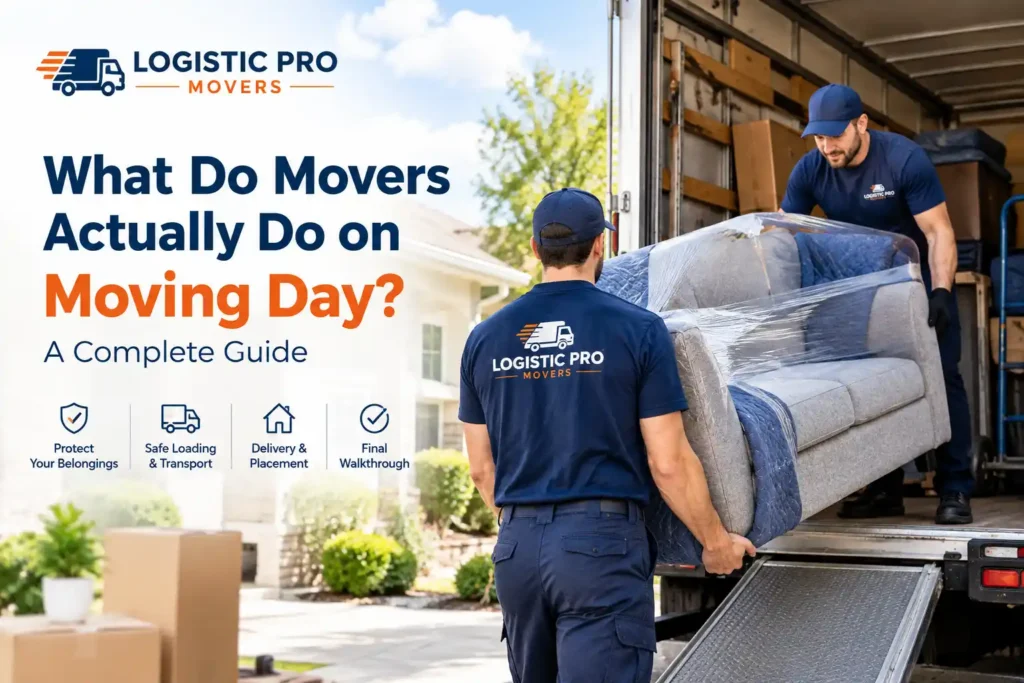
Professional movers carefully wrapping and loading furniture into a moving truck on moving day.
Affordable local movers USA, Logistic Pro movers for businesses

What Do Movers Actually Do on Moving Day? A Complete Guide

Hiring professional movers can make a relocation more organized, but many people still wonder what actually happens once the moving crew arrives. Do movers inspect every room? Who protects the furniture? How are belongings loaded, transported, and placed at the new property? On moving day, professional movers generally confirm the agreed moving arrangements, prepare furniture and belongings for safe handling, load the truck, transport the shipment, and unload items at the destination. The exact tasks depend on the services included in your moving agreement.Understanding each stage helps you communicate with the crew, know what to expect, and avoid confusion during the move. Here is how a typical professional moving process works with Logistic Pro Movers. 1. What Happens When the Moving Crew Arrives? The moving process begins with a brief conversation between you and the crew. Before heavy items are moved, it is important to confirm that everyone understands the agreed scope of work. The crew may review: The pickup address and destination. The furniture, boxes, and other belongings included in the move. Items that require extra care or special handling. Furniture or belongings that should remain at the property. Access details, including stairs, elevators, entrances, and loading areas. This initial discussion gives the moving team a clearer understanding of the property and helps prevent misunderstandings once loading begins. One person should remain available as the main point of contact. When instructions are clear and consistent, movers can work more efficiently without repeatedly stopping to confirm basic details. 2. How Do Professional Movers Protect Your Home and Furniture? Protecting belongings involves more than simply placing them inside a moving truck. Furniture, appliances, doorways, and other surfaces may need appropriate preparation before the loading process starts. Depending on the agreed service, professional movers may use furniture blankets, protective wrapping, and suitable packing materials to help reduce the risk of scratches and impact during handling and transportation. Larger furniture pieces may also require disassembly before they can be moved safely through hallways, staircases, or doorways. Under Logistic Pro Movers’ full-service moving option, furniture disassembly and reassembly are included as part of the listed service. Fragile, unusually shaped, or high-value belongings may need additional attention. For items such as paintings, antiques, sculptures, or marble pieces, specialized crating can be arranged through a professional service partner. It is always helpful to identify delicate or valuable items before the crew starts handling them. This allows the appropriate protection and service requirements to be discussed in advance. 3. How Are Belongings Loaded Into the Moving Truck? Loading is one of the most important stages of a professional move. A moving truck has limited space, so furniture, boxes, and household items need to be arranged carefully. Movers generally consider the size, weight, shape, and handling requirements of different belongings when organizing the load. Heavy furniture, fragile boxes, and items that require additional protection should be handled with their specific requirements in mind. A well-organized loading process helps: Reduce unnecessary movement during transportation. Keep fragile belongings appropriately protected. Make better use of available truck space. Support a more organized unloading process at the destination. Before loading is complete, tell the crew if an item has been mistakenly included or if something from the agreed inventory is missing. Addressing these details while the team is still at the pickup property is easier than trying to resolve them after transportation has started. 4. What Happens While Your Belongings Are in Transit? Once loading is complete, the shipment is prepared for transportation to the destination. The route, distance, delivery arrangements, and type of relocation all influence the transportation stage. For a local move, the journey may involve traveling between properties within the same city or surrounding area. Long-distance and interstate relocations require additional coordination because delivery schedules and travel distances can vary considerably. Customers should keep their main contact number available during this stage. If an address, access instruction, or delivery detail changes, communicating it promptly can help the team respond appropriately. For long-distance moves, it is especially important to understand the delivery arrangements agreed upon before the shipment leaves. Ask your relocation specialist about the expected delivery window and how updates will be communicated. 5. What Should You Expect When Movers Arrive at Your New Home? Delivery involves more than taking boxes off the truck. The crew must also understand where furniture and household items should go inside the new property. Before unloading starts, confirm the room layout and point out any access restrictions. Simple room labels or clear verbal instructions can help movers place belongings in the correct areas. During unloading, you can expect the agreed items to be brought into the property and positioned according to your instructions. Furniture reassembly may also be included when it is part of your selected full-service moving arrangement. Remember that unpacking and debris removal are listed as additional services rather than standard inclusions. Discuss these requirements with your relocation specialist before moving day if you would like help beyond unloading and furniture placement. A little communication at the destination can prevent unnecessary furniture rearrangement and make settling into the new property easier. 6. What Should You Check Before the Moving Crew Leaves? The final walkthrough is an important opportunity to review the completed delivery while the crew is still present. Take a few minutes to check: Whether the expected furniture and boxes have been unloaded. Whether items have been placed in the intended rooms. Whether agreed furniture reassembly has been completed. Whether any visible damage or concerns need to be reported. Whether you have received the relevant paperwork and understand the next steps. If you notice a concern, bring it to the attention of the crew lead and follow the moving company’s documentation and claims process. For questions about coverage, make sure you understand the applicable protection options and any additional coverage arranged for your shipment. Do not feel pressured to rush through this stage. A proper final review gives you an opportunity to clarify outstanding details before the team departs.

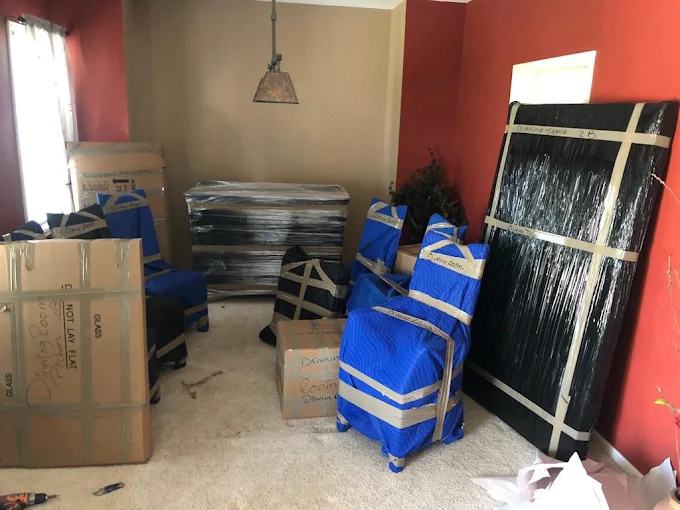
Professional packers preparing household belongings for a move in Denver, CO
Logistic Pro packing services, Moving Service, Professional packing services USA

Professional Packing vs. DIY Packing: Which Is Right for Your Move?

Moving to a new home is exciting, but packing your belongings can quickly become one of the most time-consuming parts of the process. From wrapping fragile kitchen items to organizing furniture, clothes, and electronics, every item needs proper attention before moving day. If you are planning a move in Denver, Colorado, you may be wondering whether to pack everything yourself or hire professionals to handle the job. Both options have benefits. DIY packing can help you control your budget, while professional packing can save time and help protect your belongings during transportation. In this guide, we will compare professional packing vs. DIY packing, explain their costs and benefits, and help you decide which option is right for your move. What Is Professional Packing? Professional packing is a service in which trained packing crews prepare your belongings for transportation. Instead of spending days packing boxes yourself, you can have experienced professionals organize, wrap, and pack your household items. With Professional Packing Denver, CO, residents can choose packing assistance based on the size of their move and the items they need help with. Professional packing services may include: Packing kitchenware, glassware, and other fragile items. Wrapping furniture to help prevent scratches and surface damage. Protecting electronics and delicate household belongings. Organizing boxes by room or item category. Using appropriate boxes, wrapping materials, and protective supplies. Preparing belongings for loading and transportation. At Logistic Pro Movers, customers can explore full and partial packing options based on their moving requirements. You can learn more about the company’s professional packing services. Professional packing can be especially helpful when you have a large household, limited time, or belongings that require extra care. What Is DIY Packing? DIY packing means handling the packing process yourself instead of hiring a professional packing crew. You purchase or collect packing materials, organize your belongings, wrap fragile items, and prepare boxes for moving day. This option works well for people who have enough time to prepare and want more control over how their belongings are packed. Common DIY packing tasks include: Collecting boxes, tape, labels, and protective materials. Sorting belongings and deciding what to keep, donate, or discard. Wrapping dishes, glassware, and other breakable items. Packing clothes, books, toys, and personal belongings. Labeling boxes to make unpacking easier. Preparing furniture and electronics for transportation. DIY packing can reduce the amount you spend on packing labor. However, you must account for materials, your time, and the effort required to prepare everything properly. For smaller moves or households with flexible schedules, packing independently can be a practical choice. Professional Packing vs. DIY Packing: Key Differences Before choosing an option, consider how each approach compares in terms of cost, time, convenience, and protection. Factor Professional Packing DIY Packing Cost Higher upfront service cost Usually lower labor cost Time Saves personal time Can take several days Packing materials Provided according to the service agreement Purchased or collected by you Fragile items Handled by experienced packers Depends on your packing skills Convenience Less work for you Requires planning and physical effort Flexibility Packing plan agreed upon in advance Complete control over your schedule Best for Large moves, busy households, fragile belongings Smaller moves and budget-conscious movers The right choice depends on your priorities. If saving money is your main goal and you have enough time, DIY packing may work well. If convenience and professional assistance matter more, hiring packers may be worth the additional expense. 1. Compare the Total Cost of Packing Budget is one of the biggest factors when deciding between professional packing and DIY packing. Professional packing costs When you hire professional packers, your estimate may include labor, packing materials, and the amount of work required. The final price can vary depending on the size of your home, the number of belongings, fragile or specialty items, and the level of service you choose. Full packing generally involves more work than partial packing, so ask for a quote that clearly explains what is included. DIY packing costs Packing yourself may appear cheaper because you avoid professional packing labor. However, you still need to account for boxes, packing tape, bubble wrap or paper, furniture protection, and other supplies. You should also consider the value of your time, particularly if packing requires taking time away from work or other responsibilities. Money-saving tip: Consider a partial packing service. Pack clothes, books, and other everyday items yourself, then hire professionals to handle delicate glassware, artwork, electronics, and other belongings that need extra attention. This approach can help balance your budget with the need for careful packing. 2. Consider How Much Time You Have Before Moving Day Packing takes longer than many people expect. Even a small apartment can contain hundreds of individual items that need to be sorted, wrapped, and boxed. When DIY packing makes sense DIY packing is a good option if you can start early and work through your home room by room. Create a packing schedule, set aside time each day, and begin with items you rarely use. Leave everyday essentials until closer to moving day. However, waiting until the final few days can create unnecessary stress and increase the risk of rushed packing. When professional packing is better Professional packing is worth considering if you have a large home, a demanding work schedule, or a short moving timeline. A packing crew can work through the agreed scope of your belongings systematically, allowing you to focus on changing your address, arranging utilities, coordinating access, and preparing your new home. If you are arranging a complete relocation, explore Logistic Pro Movers’ moving services to understand the available options for packing and transportation. 3. Protect Fragile and Valuable Belongings Your belongings may include more than clothes and everyday household items. Glassware, mirrors, framed artwork, electronics, decorative pieces, and delicate furniture may require additional protection. Advantages of professional packing Professional packers have experience handling different types of household items. They can select appropriate materials and packing methods based on an item’s shape, weight, and fragility. For example, glassware

Logistic Pro movers for businesses

How to Prepare for a Long-Distance Move From Denver

Thinking about moving to a different state or across the country can be quite overwhelming, particularly if you have to arrange the packing, transportation, and the dates of the move. By preparing properly, you will be able to cut down on stress, keep your possessions safe, and make the move to your new home a lot easier. If you are intending to carry out a long-distance move in Denver, Colorado, it is one of the best ideas to start early in order to keep your move in order. Whether it’s deciding on a moving company or getting your boxes ready, all the steps are important. Logistic Pro Movers can help you with your moving plans as you are organising the details and getting ready for the journey ahead. What is the importance of having a plan when moving long distances to Denver, CO? Moving a long way about needs more co-ordination than a normal local move. You’ll have to organise transport through several states, deal with delivery dates, prepare for various weather conditions, and make sure that your possessions get there safely. If you draw up a moving plan at an early stage, this will allow you to organize your responsibilities before the day of moving. It also gives you the opportunity to compare the estimates, sort through your belongings, and deal with the necessary paperwork without having to rush. Begin by putting down the date you expect to move, the place you are moving to, your budget, and your main tasks. Split these tasks into weekly objectives so that you can make consistent progress; for instance, you could book your movers six weeks in advance, start decluttering four weeks before the move, and complete the packing of unnecessary items two weeks prior to your departure. Having a clear plan makes it simpler to spot possible problems and deal with them before they interfere with your move. How many weeks ahead should you book a long-distance moving company? As a rule, it’s a good idea to book a moving company at least 4 to 8 weeks ahead for most long-distance moves. When your move is taking place during the busy summer period, at the end of a month, or on a holiday weekend, then you should book even sooner. By booking early you gain more time in which to compare the various services, to confirm that the dates are available and to get a clear understanding of the costs involved. It also enables you to avoid making hasty decisions as your preferred moving date nears. When comparing long-distance movers, ask about: Available moving dates and estimated delivery windows The services that are included in the estimate. Packing and unpacking options Coverage for lost or damaged belongings Additional fees, weight limits, or access charges Cancellation and rescheduling policies Get a written quote and ensure that it takes into account the exact inventory and services that you really need. Watch out for estimates that are abnormally low since they don’t provide clear price details. If you are going to choose Logistic Pro Movers, you should get in touch with them to talk about your route, moving date, inventory, and the services you need before deciding on your plans. What is the correct way to declutter and organize before you move? By sorting through your belongings before your long-distance move you will save time on packing and be able to avoid having to pay for the transport of things that you don’t need any more; the less unnecessary furniture and possessions you take the easier it will be to get your new home in order. Begin by dealing with one room at a time rather than attempting to tidy the whole house in a single weekend. Divide your possessions into four categories: those to keep, those to donate, those to sell, and those to discard. When disposing of items, concentrate on those that are expensive or difficult to move, for example broken furniture, unused exercise equipment, duplicate kitchen utensils, and clothes which you no longer wear.  Before getting rid of any items you do not need, make sure you have checked the donation and recycling guidelines. When you have sorted out your possessions, make a simple list of those items which you intend to move. This should include furniture, electronics, appliances, and the boxes holding valuable or fragile items. It will allow you to estimate your moving requirements, enable you to talk to your movers, and make sure that your possessions reach your destination. What is the best way to prepare for a cross-country move? The most effective way of packing is to keep your items safe at the same time as making the process of unpacking as easy as you can. In order to reduce the risk of damage and confusion when the items are being transported, use strong boxes, the right kind of cushioning, and clearly labelled boxes. Begin by putting into storage the items that you don’t use very often, such as seasonal decorations, books, extra linens, and other stored goods, and save your everyday essentials until right before you move. Follow these packing tips: For heavy objects such as books, use small boxes. Put the heavier objects at the bottom of each box. Wrap each individual item such as fragile dishes, glassware, and decorations. To fill in the empty spaces with appropriate packing material so as to reduce movement. Put the name of the room along with a short description of what is in the box. Separate important documents, medications, valuable items, and your daily essentials. For instance, instead of just marking the box as ‘Kitchen’, label it ‘Kitchen — Everyday Plates’; specific labels make it easier to decide which boxes to deal with first when unpacking. If you don’t want to pack everything yourself, inquire with your moving company about whether they offer professional packing services. Make sure to find out which materials and services are covered in the quoted price. What are you supposed to do

Affordable local movers USA, Cheap movers USA, Expert moving services USA, Logistic Pro long-distance movers

Local Moving Services in Denver, CO: How to Make a Local Move Faster and Easier

Relocating to a new apartment, house, or office can be an exciting experience, but it usually requires more planning than you anticipate. The tasks of packing your belongings, arranging transport, safeguarding your furniture, and coordinating your timetable can soon become quite stressful. Hiring professional moving services that are based in Denver, CO, can help to make the whole process more organized and easier to manage. People move to Denver for all sorts of reasons, such as taking a new job, growing their family, needing new housing, or seeking a fresh start in a new neighborhood. Whatever your reason, if you prepare in advance and use a reliable moving company, you can save time, keep your possessions safe, and settle into your new home more easily. This guide from Logistic Pro Movers shows you how to plan a local move, avoid common mistakes, and make moving day easier. What do local moving services in Denver, CO entail? Local moving companies help individuals, families, and businesses move their belongings between nearby locations. These services usually include loading, transporting, unloading, and, for packages, help with packing and moving furniture. Hiring professional movers reduces physical effort and helps you organize your moving schedule more efficiently. Instead of handling every detail yourself, you can plan around a fixed timetable and discuss your needs with your moving company. Local moving services may be useful when you’re: Moving from an apartment to a house Relocating to another Denver neighborhood Moving into a new rental property Downsizing or moving into a smaller home Relocating a small business or office Moving furniture between residential properties Before you book, make sure you know which services your estimate covers, as some moves need only transportation and loading, while others benefit from packing, furniture disassembly, or extra handling. What can you do to make a local move quicker and easier? The simplest way to carry out a local move is to start getting ready before moving day. Make a checklist, get rid of items you don’t need, sort out your packing, and arrange transportation as early as possible. These steps prevent last-minute decisions and make it easier to track your important items. A practical moving plan should cover the following tasks: Four weeks before moving, confirm your moving date, research moving companies, set a budget, and start sorting your belongings. Two weeks before you move, pack items you don’t use often, arrange the transfer of your utilities, update your address, and check building access requirements. A week before your move, complete most of the packing, clearly label the boxes, and make a list of what you need. The day before you move, make sure your important documents, medications, chargers, keys, and essential toiletries aren’t packed in the moving truck. For instance, when you move from an apartment in Denver to a nearby house, it makes sense to pack your seasonal clothes and decorative items first so you have fewer things to sort out on the last day. How do you choose the right moving company in Denver? When selecting a moving company, don’t just compare prices; look for good communication, clear estimates, appropriate insurance, and a service plan that matches the scale and complexity of your move. When comparing local moving companies in Denver, consider these factors: Request written estimates with a detailed quote outlining the services included and any extra charges. Ask if the company regularly carries out moves similar to yours. For insurance and liability, confirm the extent of coverage for your belongings and what responsibilities apply if something is damaged. For scheduling, confirm the arrival window, expected duration, and procedures for delays. For customer reviews, look for consistent comments about punctuality, communication, and careful handling. Available services include packing, furniture disassembly, and other support. Be sure to tell the moving company about stairs, elevators, long carries, restricted parking, or oversized furniture, since these details can affect planning, timing, and cost. Logistic Pro Movers suggests that customers discuss their moving needs in advance so they know the arrangements before moving day. What should you pack before moving on day? Packing room by room and labeling each box with what’s inside and where it’s going makes it easier. Start with items you don’t use every day, then move on to everyday essentials as the moving date nears. To protect delicate items, use strong boxes and the right packing materials. When filling the boxes, put heavier objects in smaller ones so they’re easier to lift, and don’t leave empty spaces, as they can allow objects to shift during transport. Follow these practical packing tips: Label each box with the room name and a short description. Wrap the glassware, dishes, and delicate decorations separately. Put screws and other small hardware from furniture that has been taken apart in labeled bags. Put books and other heavy objects in manageable amounts. Sort out your valuables, personal documents, and essential medications. Before you unplug them, take photographs of the complex electronics connections. Pack a bag with a change of clothes, toiletries, snacks, water, chargers, and anything else you will need right after you arrive. If packing seems like too much, ask your moving company whether they offer professional packing assistance; help with certain rooms or delicate items can save time and reduce the risk of damage. What do local moving services in Denver cost? The price for a local move varies based on factors such as the amount of furniture, the distance between the two properties, the number of movers needed, access conditions, and the services you request. Additional considerations may include packing help, special items, stairs, and difficult parking situations. Moving into a smaller flat usually requires fewer resources than moving a large family home with several bedrooms and lots of furniture. But the exact cost depends on the specifics of the job, not just the type of property. To help estimate your moving expenses: List your main furniture and appliances. Work out how many boxes you will need. Check for stairs, elevators, parking

Logistic Pro packing services, Moving company for large homes, Moving Service

What Should You Pack First When Moving to a New Home?

The easiest way to begin packing is to start with items you rarely use. Seasonal clothing, holiday decorations, books, collectibles, and extra kitchenware can usually be packed well before moving day. Keep everyday essentials accessible, and work through your home one area at a time.Whether you pack yourself or hire professional packing services, a simple plan can make moving less stressful. Logistic Pro Movers offers full and partial packing options in Denver. Explore our professional packing services. What Should You Pack First When Moving? Start with belongings you can live without for several weeks. These often include: Choose a small, manageable area such as a guest closet, bookshelf, or storage cabinet and finish it before moving on. Label each box with its destination room and a brief description of what’s inside. Use appropriately sized boxes and avoid making them too heavy to lift safely. What to Pack Several Weeks Before Moving Begin by sorting items into three groups: keep, donate or sell, and discard or recycle. Decluttering before packing means fewer items to box, move, and unpack.Pack items you won’t need soon, but consider the weather and your destination. For example, keep cold-weather clothes accessible if you’re moving during winter or to a colder climate. How to Pack Room by Room Packing by room makes it easier to keep similar belongings together and direct boxes to the right places in your new home. Room or area Pack early Leave accessible Guest bedroom Extra bedding, decorative pillows, accessories Any items guests may still need Living room Books, collectibles, wall art Everyday electronics and remotes Kitchen Specialty appliances, servingware, extra cookware Basic dishes, utensils, and a few pans Bedroom Off-season clothes, shoes, accessories Everyday clothes and sleepwear Bathroom Backup toiletries, extra towels Daily toiletries and medications Storage or garage Seasonal gear and seldom-used tools Items needed for last-minute repairs or cleaning Keep cleaning supplies and a few basic tools available until the home is empty. If you hire residential packing services, tell the crew which items should remain unpacked and identify anything that needs special handling. What Should You Leave Until the Last Few Days? Save items you use every day for last. This may include: Everyday clothing and shoes Toiletries and personal-care products Prescription medication and medical supplies Phone chargers and essential electronics Basic dishes, cups, and utensils Bedding and towels Important documents, jewelry, and valuables A small amount of cleaning supplies Pack a suitcase or overnight bag for each household member with a few days’ worth of clothing, toiletries, medication, chargers, and other necessities. Keep these bags with you rather than loading them onto the moving truck. What to Put in an Essentials Box An essentials box should contain the items you’ll want immediately after arriving. Consider packing: Toilet paper, hand soap, and paper towels Basic dishes and a few utensils Snacks and a reusable water bottle Phone chargers A change of clothes Essential medications Bedding for the first night A small cleaning kit Scissors or a box cutter, kept safely out of children’s reach Label the box clearly and load it last so it can be unloaded first. For important documents, medications, and valuables, keep them with you. How to Pack Fragile Items and Valuables Wrap fragile items individually and use suitable cushioning to prevent them from shifting inside the box. Fill empty spaces with packing paper or other appropriate padding. Mark boxes containing fragile items clearly, but don’t rely on labels alone—pack them so they can withstand normal handling. For a safer move: choose a sturdy box that suits the item’s weight. Wrap glassware, dishes, and ornaments separately. Cushion the bottom, sides, and top of the box. Place heavier items at the bottom and lighter items above. Avoid overfilling boxes or leaving items loose inside. Carry jewelry, important documents, cash, and irreplaceable valuables yourself. If you have artwork, mirrors, antiques, or other unusually delicate belongings, tell your movers in advance. Ask what packing materials and handling options are available. Logistic Pro Movers provides professional packing options for customers who want help with all or part of the packing process. Should You Hire Professional Packers in Denver, CO? Hiring professional packers in Denver, CO can be helpful if you have a large household, limited time, fragile belongings, or simply want to reduce the work before moving day. Depending on your needs, a packing crew may handle the entire home or focus on selected rooms and delicate items.Before booking, ask for a written estimate and confirm: Whether packing materials are included Which rooms or items are covered Whether full or partial packing is available How fragile, oversized, or specialty items are handled What items the crew cannot pack How payment, valuation, and any applicable coverage work Logistic Pro Movers offers packing support for different moving needs. Visit the packing services page to learn more, or contact the company to discuss your move and request an estimate. Moving and Packing Checklist Use this general timeline as a starting point. Adjust it to your home size, schedule, and moving date. Three to Four Weeks Before Moving Sort belongings and donate, sell, or recycle what you don’t need. Pack decorations, books, collections, and seasonal items. Gather boxes, tape, labels, and packing materials. Confirm your moving arrangements and any special requirements. Two Weeks Before Moving Pack guest rooms and storage areas. Box extra kitchenware, specialty appliances, and spare bedding. Start a list of items that need special handling. Set aside documents and valuables you’ll transport yourself. One Week Before Moving Pack most nonessential clothes and home accessories. Prepare suitcases and an essentials box. Label boxes with the destination room and a short contents description. Keep daily-use items accessible. One to Two Days Before Moving Pack remaining nonessentials. Keep medication, documents, valuables, and chargers with you. Leave basic cleaning supplies available. Confirm the moving-day plan and any agreed packing services. Moving Day Check closets, cabinets, drawers, and storage areas. Keep personal essentials and valuables with you. Confirm boxes are labeled and ready to load.

Professional movers carrying furniture during a local move in Denver, CO
Uncategorized

What Does Full-Service Moving Entail? A Complete Guide for Homeowners in Denver

If you’ve been looking at various quotes, you’ll most likely have noticed that the meaning of ‘full-service moving’ is a bit different according to who you’re asking. In Denver, Colorado, full-service moving usually includes all the work from packing to unloading, but since the range of services offered differs so much from company to company, it’s important to know what should be covered before you decide to book. The following guide explains what a true full-service move involves, what is often provided as an extra service, and how you can prevent paying for things you don’t really need. What does a full-service move actually involve? A full-service moving operation involves the packing, loading, transportation, unloading, and basic positioning of furniture, all carried out by the moving company’s staff. The concept is that you won’t have to do any of the physical work; instead, you only need to tell them where the items should go. The core components typically include: Since not all companies that offer full-service include every one of these features by default, you should ask the company to verify each one rather than make an assumption. What Is Typically Excluded, Even in the Case of a Full-Service Move? Specialty item handling, storing for a length of time longer than a brief grace period, and the process of unpacking at the destination are usually left out or provided only as extra paid services, even in moving packages that are otherwise very comprehensive. It is important to be aware of this in advance so that there are no surprise fees on the day of the move. Things to specifically ask about: Hint: When making your booking, request a written list specifying precisely what is included, rather than just being given a verbal answer such as ‘yes, we provide full-service‘. Having a written list will protect you in the event that anything is overlooked on the day of the move. Is packing included, or is it an extra charge? To a large extent this varies from company to company and is therefore one of the most important points to check before making a booking; while some full-service moving companies offer complete packing as part of their standard service, others provide it only as an extra service in addition to the basic move. A few packing-related questions worth asking directly: If full packing seems like more than you need, partial packing is a sensible compromise: you can handle the simpler rooms yourself and have the moving company take care of anything fragile or time-consuming, such as the kitchen or a home workspace. What is the cost of a full-service move in Denver? Since full-service moves are more expensive than those that only involve labour, the price includes the cost of materials, the time taken for packing, and more thorough handling. However, the exact amount largely depends on the size of the home and the distance involved. An apartment with two bedrooms is considerably less expensive than a four-bedroom house, and the final price takes into account the number of workers, the number of hours worked, and the materials used. Cost factors that matter most: The best way to get an accurate figure is to request an in-home or video estimate rather than a phone quote, since a company can’t properly assess your packing needs without seeing what you own. Is the extra cost of full-service moving worthwhile? Yes, for many people, particularly when it is more important to them to save time, reduce physical effort, or alleviate stress than to cut labour costs. Hiring a full-service moving company means paying more but with considerably less physical and administrative work. It tends to make the most sense when: A move of this kind might seem less appealing if you have a small apartment, are free with your time, and are not minded about having to pack yourself; in such a situation, a labor-only or partial-service move could save a considerable sum of money. How can one select a reliable full-service mover in Denver? Before booking, find out whether the company is a licensed carrier or just a broker, and check its standing with the Federal Motor Carrier Safety Administration (FMCSA); this one step eliminates much of the negative experience people have after a move. The difference is greater than most people realize: the carrier owns the trucks and hires the drivers who come to your door. A broker, on the other hand, sells your move to a different company, sometimes one you haven’t heard of until the day you move. Neither arrangement is automatically a scam, but if you’re paying for full service, you should know exactly who is looking after your possessions. A short vetting checklist: Frequently Asked Questions How many days ahead should I book a full-service move in Denver? A reasonable goal is two to four weeks in advance, although weekends and the end of the month tend to book up faster because of higher demand from lease turnover. If you book earlier, you will have more flexibility with regard to date and crew availability. Does a full-service moving service involve taking apart furniture? In most full-service moving arrangements, the basic disassembly and reassembly of furniture such as bed frames and large shelving is included. However, check that this applies to any unusual or custom furniture you own, as very large or complicated pieces may need extra time. Will the moving company pack delicate items such as glassware and artwork? Certainly, standard packing usually includes fragile items, often with additional padding and special boxes. For particularly valuable or sentimental fragile items, mention them so the team knows to handle them with extra care. Does a full-service move include insurance? Basic released-value coverage is usually provided at no extra charge, but it typically pays by weight rather than by the item’s actual value. If you have high-value possessions, ask about optional full-value protection. May I have partial packing rather than full packing? Yes, some moving companies offer partial packing, where